AI Automation Article
How to Write an AI Voice Agent Script That Books Calls, Not Just Answers
Most AI voice agents can answer questions. Far fewer can book a call. The difference is rarely the voice or the technology. It is the script.
A script is the conversation plan your voice agent follows. It decides what the agent says first, which questions it asks, and how it moves a caller from a question to a booked appointment. A weak script turns the agent into a talking FAQ page. A good one turns it into a helpful receptionist.
What a voice agent script actually does
A caller phones a business with a reason. They want a price, an opening, or an answer they could not find online. The script's job is to handle that reason quickly, then guide the caller to the next step.
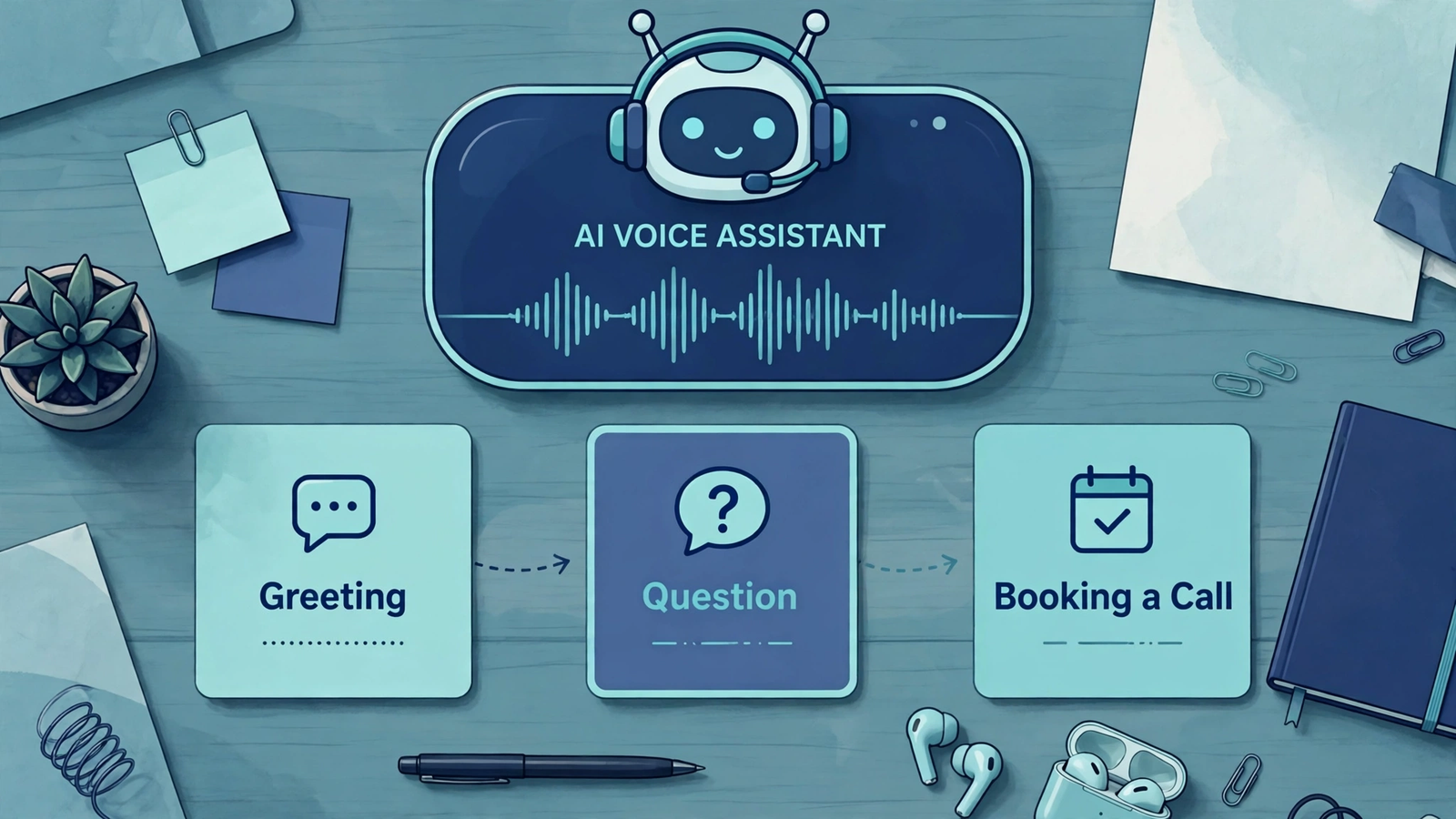
Think of it as a short path: greet, understand, qualify, book, confirm. Every line in the script should move the caller one step along that path. If a line does not help the caller or move the conversation forward, it probably does not belong.
Start with the caller's reason for calling
Before writing a word, list the five most common reasons people call the business. For most small businesses these are opening hours, prices, availability, directions, and booking or rescheduling.
Write a short answer for each one, in the order a real person would say it. The agent should answer the caller's reason first and only then offer the next step. A caller who wanted a price and got a booking pitch instead will hang up.
The structure that books calls
- A script that books calls follows the same five steps, every time:
- Greet warmly and say the business name, so the caller knows they reached the right place.
- Ask what the caller needs, in one short question.
- Answer the question, briefly, without extra detail the caller did not ask for.
- Offer the booking: suggest two times, not an open question like "when would you like to come in?"
- Confirm the details back: name, number, date and time, so the caller leaves knowing the booking is real.
Offering two specific times matters. An open question makes the caller do the thinking. Two choices make saying yes easy.
Write it the way people talk
Read every line out loud before you approve it. If a sentence sounds strange spoken, rewrite it. Short sentences work best. Avoid jargon, long words, and sentences with more than one idea.
Write the agent's lines the way a friendly receptionist would actually speak. For example, "I can book that for you — would Tuesday at 10 or Wednesday at 2 work better?" sounds natural. "Please indicate your preferred temporal slot for the appointment" does not.
Handle the common objections
Most callers who do not book have one of three concerns: price, timing, or trust. Give the script a calm, honest answer for each one.
- Price: give the starting price or the range, and say what is included. Never invent a discount.
- Timing: offer the next available slot and the next one after it, instead of saying the diary is full.
- Trust: offer to send a confirmation by text or email, and say what happens next.
The agent should never argue, pressure, or invent an answer it does not have. If it does not know, the script should say so and offer to take a message.
What to leave out
- A script gets worse as it gets longer. Leave these out:
- Long introductions about the business. The caller already chose to call.
- Questions the business does not need. Every extra question is a reason to hang up.
- Promises the business cannot keep, such as guaranteed results or same-day slots that do not exist.
- Upselling before the booking is made. Book first, then offer extras.
Test it with real calls
No script is finished until real callers have used it. Listen to the first few calls and note where callers hesitate, repeat themselves, or hang up. Those moments show exactly which lines need rewriting.
Change one thing at a time and test again. Small, steady edits beat a full rewrite. A script that improves a little every week will soon book far more calls than the first version ever did.
If you want a voice agent that follows a script like this for your own business, see the AI Lead Capture System and our AI voice agent service.
Frequently Asked Questions
How long should a voice agent script be?
Short enough to keep a caller engaged. Most booking scripts fit on one page: a greeting, a few questions, the booking offer, and a confirmation. If the script runs longer than a two-minute call, cut it down.
Should the agent say it is AI?
Yes, in a natural way. A simple "Hi, this is the automated assistant for [business name]" is honest and sets the right expectation. Callers are comfortable with it when the agent is genuinely helpful.
What if the caller asks something the script does not cover?
The script should have a fallback line: the agent admits it does not have that answer and offers to take a message or transfer the call. Guessing or inventing an answer is always worse than admitting a gap.
How often should the script be updated?
Whenever the business changes a price, a service, or opening hours — and at least once a month from listening to real calls. Out-of-date information is the fastest way to lose a caller's trust.
Can one script work for every business?
The structure is the same, but the words must fit the business. Prices, services, and the questions callers actually ask are different everywhere. Start from the structure above and fill it with the business's own real details.