AI Automation Article
AI Voice Agent vs Live Chat: Which One Should Answer First?
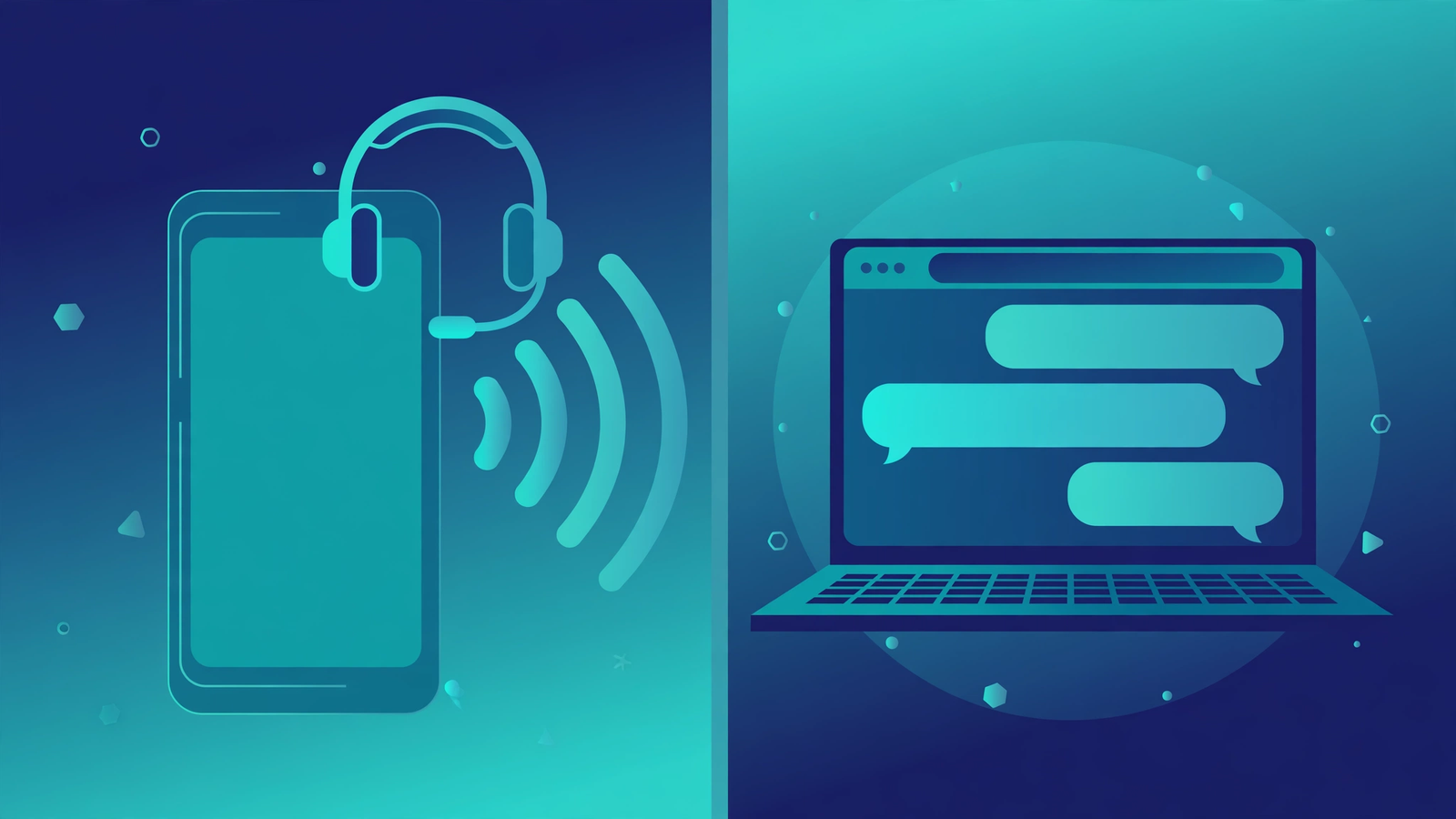
When someone contacts your business for the first time, the first few seconds decide whether that enquiry turns into a conversation or a dead end. Two tools compete for that first touch: an AI voice agent that answers the phone, and live chat on your website. Both can work well. The mistake is treating them as rivals instead of asking which one should answer first in each situation.
What an AI Voice Agent Does
An AI voice agent answers phone calls, talks with the caller in natural language, asks a few qualifying questions, and books the call or takes a message. It works around the clock, so a caller at 9pm gets the same greeting as a caller at 9am. For a business that gets most of its enquiries by phone, this is the front door. Our AI voice agents are built for exactly this: answer, qualify, and book, without keeping the caller waiting.
The strength of a voice agent is that it meets people where they already are. A caller chose the phone for a reason, usually because the question feels urgent or the decision feels big. A voice agent respects that choice instead of pushing the caller back to a website form.
What Live Chat Does
Live chat sits on your website and catches people while they are already reading. A visitor has a quick question, wants to check a detail, or is deciding whether to enquire at all. Chat is low pressure: nobody has to pick up the phone, and the conversation can pause while the visitor thinks.
Chat works best when the question is small and the visitor is still browsing. It is also the right first touch for people who found you through search and are comparing options, because it lets them ask without committing to a call.
The Real Difference Is Urgency, Not Technology
The choice between voice and chat is not really about which tool is smarter. It is about what the person needs right now.
- A caller is usually further along. They have already decided to talk to someone.
- A website visitor is usually earlier. They are still deciding whether your business is the right fit.
- A missed call is more expensive than an unanswered chat, because the caller may simply ring the next business on the list.
- An unanswered chat is quieter, but it still costs you: the visitor leaves and you never learn they were there.
That is why the question is which one answers first, not which one you should have. Most businesses that rely on enquiries need both, routed by where the person shows up.
When the Voice Agent Should Answer First
The voice agent should be the first responder whenever the phone rings. That sounds obvious, but many businesses still let calls go to voicemail during busy hours or after closing time, then return them hours later. By then the moment has passed.
A voice agent should answer first when:
- The enquiry arrives by phone, at any hour.
- The caller's question needs a back-and-forth, not a one-line answer.
- The next step is a booked call, a quote, or a consultation.
- Your team is busy, out, or closed, and the call would otherwise go unanswered.
In these cases the voice agent does the job a receptionist would do: greet, listen, qualify, and book. The difference is that it never misses a call because it was on the other line.
When Live Chat Should Answer First
Live chat should answer first when the person is already on your website. They have not picked up the phone, and asking them to do so adds friction they did not ask for. A chat window that opens with a simple, useful question catches the visitor in the moment.
Chat should take the lead when:
- The visitor is browsing a service page and has a quick question.
- The question is simple: pricing range, availability, next steps.
- The visitor is comparing options and not ready for a call.
- The enquiry comes in outside phone hours but the visitor is still on the site.
Chat can also hand over cleanly: once the visitor's question needs a real conversation, the chat can offer a call-back or a booking link instead of making them start over.
The Setup That Works for Most Small Businesses
For most agencies, freelancers, and small businesses, the practical answer is simple: let each channel answer its own front door, and connect both to the same follow-up.
- The phone is answered by the voice agent, every time, day or night.
- The website is answered by live chat while the visitor is there.
- Both routes feed into one system that records the enquiry, qualifies it, and books the call. That is what our AI Lead Capture System is built to do: no enquiry sits unanswered, whichever channel it came through.
- Anything the automation cannot resolve gets passed to a human with the full context, so the person never has to repeat themselves.
The goal is not to replace people. It is to make sure the first response is instant, and the human step happens where it adds the most value — on the call itself.
Common Mistakes to Avoid
- Sending every caller to a website form. A caller chose the phone; respect that.
- Putting a chatbot on the phone and a phone number on the website, with no link between them. The enquiry gets lost between channels.
- Letting chat sit unanswered. A chat widget nobody monitors is worse than no chat at all, because it promises a reply and then breaks the promise.
- Automating the greeting but not the follow-up. Answering first only helps if the enquiry is captured and followed up the same day.
- Choosing one channel and dropping the other. The businesses that lose the fewest enquiries are the ones that answer everywhere their customers show up.
Frequently Asked Questions
Should a small business have both a voice agent and live chat?
Yes, if enquiries arrive through both channels. The phone and the website are different front doors, and each one should be answered. The cost of leaving either unanswered is the enquiry you never see.
Can a voice agent book calls directly?
Yes. A well-set-up voice agent asks the qualifying questions, checks availability, and books the call into your calendar, then confirms it with the caller. The booking is the point, not the conversation itself.
Is live chat enough on its own?
It is enough if almost all your enquiries start on your website. But if a meaningful share of your customers call, chat alone leaves those callers unanswered, and a missed call is the easiest enquiry to lose.
What happens when the automation cannot answer a question?
It should hand over to a human with the full conversation so far, not ask the person to start again. A clean handover is what separates a helpful system from a frustrating one.
Which one should I set up first?
Start with the channel your enquiries already come through. If most people call, set up the voice agent first. If most people arrive on your website, start with chat. Then add the second channel and connect both to the same follow-up.
The Bottom Line
The voice agent and live chat are not competing for the same job. The voice agent answers the phone, live chat answers the website, and the winner is whichever one meets the person where they already are. Set up both, connect them to one follow-up, and no enquiry has to wait for office hours to be heard.